
Smarter Flush Partner Information Packet
– For Hotels, Motels, Resorts & Multi-Unit Properties
Smarter Flush provides water‑saving solutions that help households and businesses reduce water consumption and lower utility costs. This enhanced overview reorganizes the key information from the Smarter Flush Partner Information Packet into a concise, visually friendly format. Each section highlights essential facts, benefits, and installation details to help you evaluate the advantages of Smarter Flush products.

Why Upgrade Existing Toilets?
Cost‑effective dual‑flush performance. Smarter Flush’s dual‑flush conversion kit delivers the same water‑saving performance as a new dual‑flush toilet without the high replacement cost ($350–$800) or the hassle of a full installation.
Reduces consumption. The system uses 1 gallon for liquid waste and 2 gallons for solid waste, significantly less than standard single‑flush toilets.
Significant water savings. A family of four can save 18,000–46,000 gallons of water per year.
Reliability & ROI. Eliminating the flapper and chain improves flushing performance and avoids leaks. Because water costs continue to rise, the upgrade pays for itself in months rather than years.
▌Water Usage Comparison
Annual Toilet Water Usage & Savings Per 100 Guest Rooms
| Toilet Tank Size |
|---|
| 7.0 gallon tank |
| 5.0 gallon tank |
| 3.5 gallon tank |
| 1.6 gallon tank |
| Annual Water Use with Flapper & Chain |
|---|
| 3,193,750 gallons |
| 2,281,250 gallons |
| 1,596,875 gallons |
| 730,000 gallons |
| Annual Water Use with Smarter Flush |
|---|
| 565,750 gallons |
| 565,750 gallons |
| 565,750 gallons |
| 565,750 gallons |
| Annual Water Saved with Smarter Flush |
|---|
| 2,628,000 gallons |
| 1,715,500 gallons |
| 1,031,125 gallons |
| 164,250 gallons |
Key Takeaways
Hospitality-Scale Water Impact
The table below illustrates the annual toilet water usage and savings for a 100-room hotel or resort, based on common toilet tank sizes found in hospitality properties. It highlights how upgrading existing toilets to Smarter Flush dual-flush systems dramatically reduces water consumption—without replacing fixtures. The table also shows that even new low-flow toilets benefit from dual-flush conversion, with water savings translating directly into lower utility bills.
Typical Payback
Most hospitality installations recover their investment within one billing cycle to a few months, depending on water rates and existing toilet type. Savings continue every year after.
▌Smarter Flush System
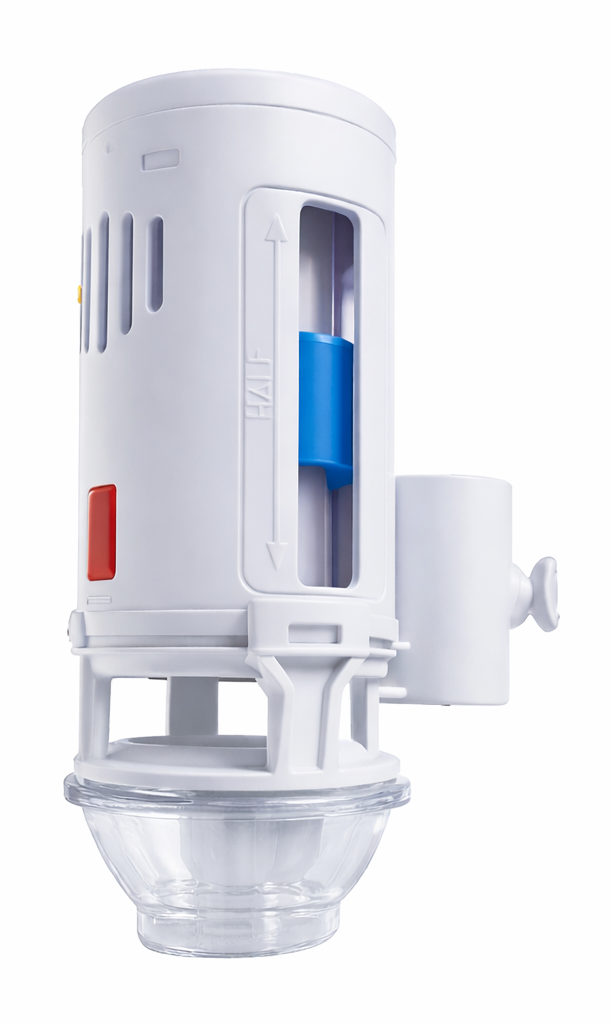
The Smarter Flush system is designed for long-term performance in hospitality environments, combining water efficiency, reliability, and ease of maintenance.
Highlights
Dual-Flush Valve System
Uses 1 gallon for liquid waste and 2 gallons for solid waste, significantly reducing water use without compromising flush performance.
Overflow Water Conserver (OWC)
Redirects clean refill water back into the tank, allowing the fill valve to shut off sooner and preventing unnecessary water waste.
Flapper & Chain Elimination
Removes the most common failure points in guestroom toilets, reducing leaks, maintenance calls, and guest complaints.
Hospitality-Ready Compatibility
Available in 2” and 3” configurations, designed to work with most residential and hospitality toilet models.
Designed for installation by in-house maintenance teams and built to perform reliably in high use environments.
Why Smarter Flush Conversion Kits Matter
Quick installation. Upgrades existing toilets to modern dual‑flush performance in minutes.
Extra savings. Saves up to 26% more water than standard low‑flow toilets and eliminates common leak sources such as flappers and chains.
Fast ROI. Pays for itself within months as water and sewer rates rise.
Supports sustainability. Helps meet green certification goals (LEED, Green Key, GreenLeaders, etc.)
Widespread impact. As of 2025, tens of millions of U.S. toilets still exceed federal water consumption limits. Hotels such as Hilton Palacio Del Rio have cut water use by 49% with dual‑flush systems.
▌Water Crisis & Conservation Facts
Global & National Context
Limited fresh water. Although 70% of Earth’s surface is water, only 3% is fresh, and less than 1% is accessible for daily use. Climate change, aging infrastructure, and population growth place added stress on this finite resource.
Growing water stress. The U.S. Environmental Protection Agency notes that over 40 states experience water stress.
Key Facts for 2025
Major household consumer. Toilets still account for about 30% of indoor household water use.
High household usage. An average family of four uses roughly 140,000 gallons annually (about 400 gallons per day).
Older vs. new toilets. Pre‑1995 toilets use 3.5 – 7 gallons per flush (GPF), whereas since 2010 new toilets must use 1.28 GPF or less.
Leakage waste. Toilet leaks cause roughly 20% of water waste, often due to worn flappers and chains.
Dual‑flush benefit. Dual‑flush technology allows a 1‑gallon short flush (liquid waste) or a 2‑gallon full flush (solid waste), reducing unnecessary water use.
Accessible upgrade. Smarter Flush conversion kits bring dual‑flush functionality to existing toilets without the high cost of replacement.
▌Problems with Flappers & Chains
Common Issues
High failure rate. About 20% of all toilets leak at any moment, often due to deteriorating flappers.
Poor fit & materials. Many flappers are chlorine‑resistant but still fade, stain hands and fit poorly.
Compatibility problems. “Universal” flappers often don’t work on specific toilets and store‑bought replacements frequently leak soon after installation.
Chain issues. Chains can tangle or catch under the flapper, preventing proper sealing and causing continuous leaks or incomplete flushes.
Widespread Waste
Over 222 million residential toilets are in use in the U.S., and toilets account for nearly 30% of indoor residential water use—more than 2.1 trillion gallons annually.
The average person flushes a toilet about 140,000 times in their lifetime.
Commercial Impact
The U.S. has about 5.7 million guestrooms, many with water‑wasting toilet systems.
Leaky toilets hurt sustainability scores and green certifications (LEED, Green Key, Green Globe, GreenLeaders, etc.) and increase maintenance costs for hotels.
Water‑saving upgrades like Smarter Flush can reduce utility bills and help meet corporate ESG goals.
Costly Leaks
A leaking toilet can waste 30 – 500 gallons per day.
A continuously leaking toilet may waste over 180,000 gallons per year and often goes undetected in guest bathrooms or low‑use areas.
Leaks also contribute to higher sewer and wastewater charges, not just water bills.
▌Overflow Water Conserver (OWC)
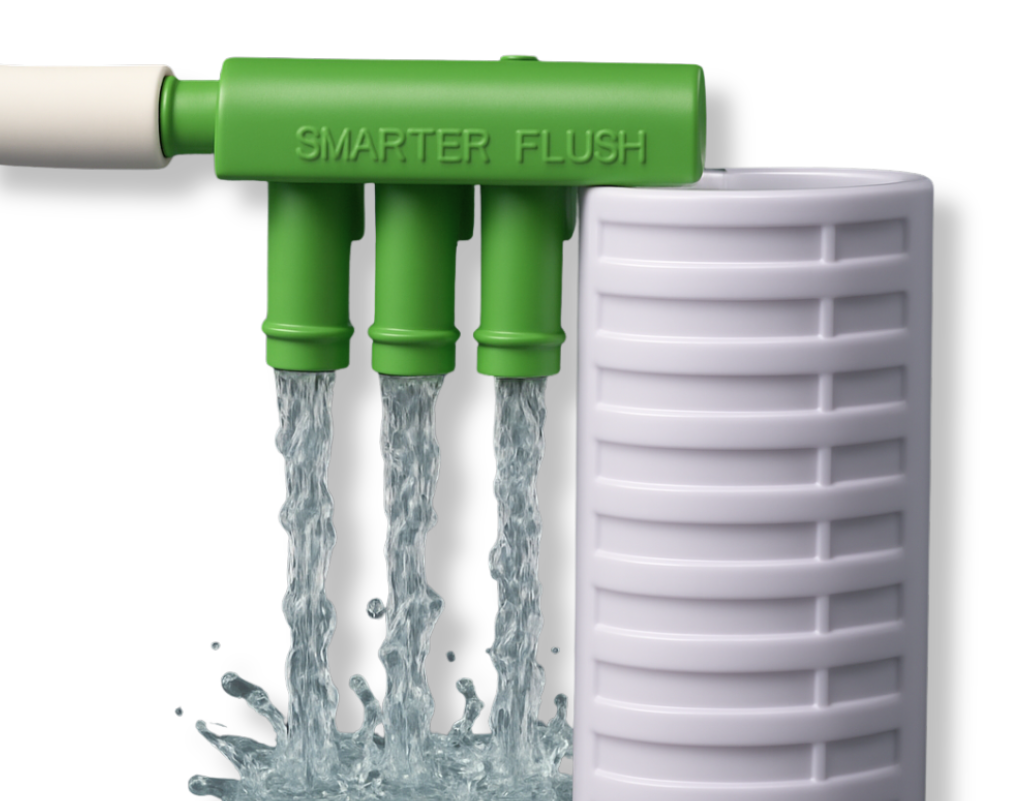
The Overflow Water Conserver (OWC) is a simple device that attaches to the end of the refill hose and redirects water into the tank instead of wasting it down the overflow tube.
How It Works
Reduces wasted refill water. In standard toilets, clean water from the refill valve is split between the tank and bowl. After the bowl fills, extra water flowing into the bowl is wasted. The OWC reroutes that water back into the tank.
Clip‑on installation. It clips onto the overflow pipe and attaches to the refill hose without tools.
Benefits
Easy install. Installs at the end of the refill hose and on top of the overflow tube. No tools or adjustments are necessary.
Adjustable savings. The OWC’s nozzles determine the level of water saved per flush—1 quart to 1 gallon, depending on toilet size.
Maintains performance. Redirecting water does not restrict water flow or reduce flushing power.
Key advantages. Simple installation, faster tank fill (less wasted water), eco‑friendly solution and quick return on investment.
▌FAQ
Will guests notice a difference?
No. Flush performance is consistent and reliable, with no change to user experience.
Will this reduce flush power?
No. The system is gravity-fed and engineered to maintain proper bowl evacuation.
Is this compatible with hotel toilets?
Yes. Smarter Flush systems are available in both 2″ and 3″ configurations commonly found in hospitality properties.
Explore Smarter Flush for Your Property
Speak with a Smarter Flush specialist to review toilet types, water rates, and potential savings for your property. No obligation, just clear answers and real numbers.
Quick Links
Smarter Water Solutions for Commercial & Residential Properties
Contact Us
(650) 281-6085

Plummbing Certifications: United States | Canada
© 2026 Smarter Flush. All Rights Reserved. Privacy Policy | Terms of Service